Research, an options paper, long-term recommendations and a roadmap for modern, AI-assisted search across MBIE's websites, shaped by how other agencies run search and worked out with teams across MBIE.
The challenge
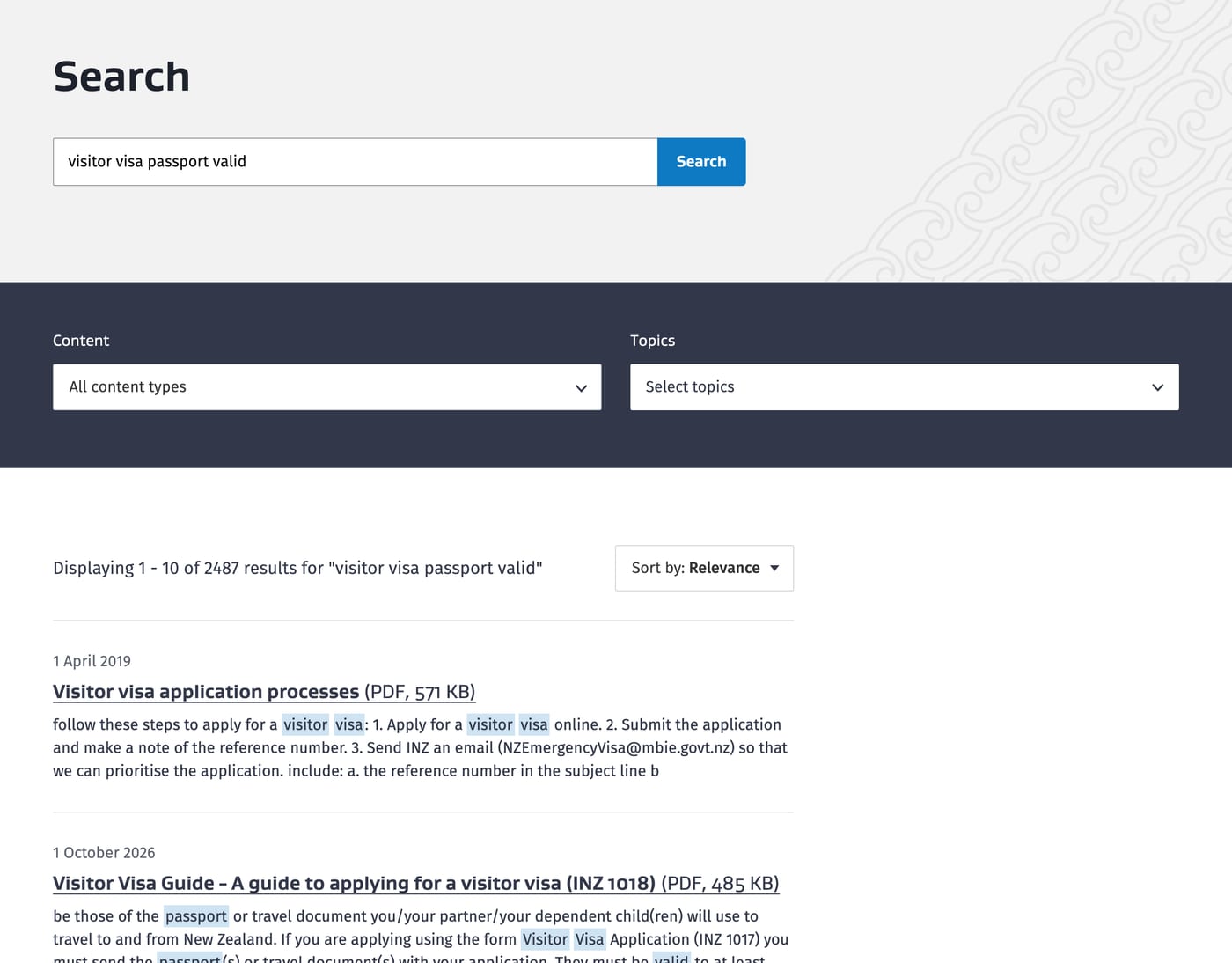
MBIE runs many public websites, and each one grew its own search. Most of them still match keywords and return a long list of pages, so a short question can bring back thousands of results and leave the reader to work out which one answers it.
People also reach MBIE's guidance through Google and, more and more, through AI assistants that answer the question directly. MBIE needed one direction for where its own search should go next, including how and where to use AI.
What I did
- Researched how search works across MBIE's websites today, and wrote up the options in a search options paper
- Wrote a long-term recommendations paper for modern, AI-assisted search across the websites
- Wrote functional requirements for the search procurement, including requirements for AI-assisted search
- Led a vendor-neutral evaluation of AI and enterprise search platforms, including Microsoft, Google and specialist providers
- Ran a workshop with teams across MBIE that produced the roadmap and an action plan
- Briefed leadership and the teams who run the websites on the direction for AI-assisted search
From a list of links to an answer
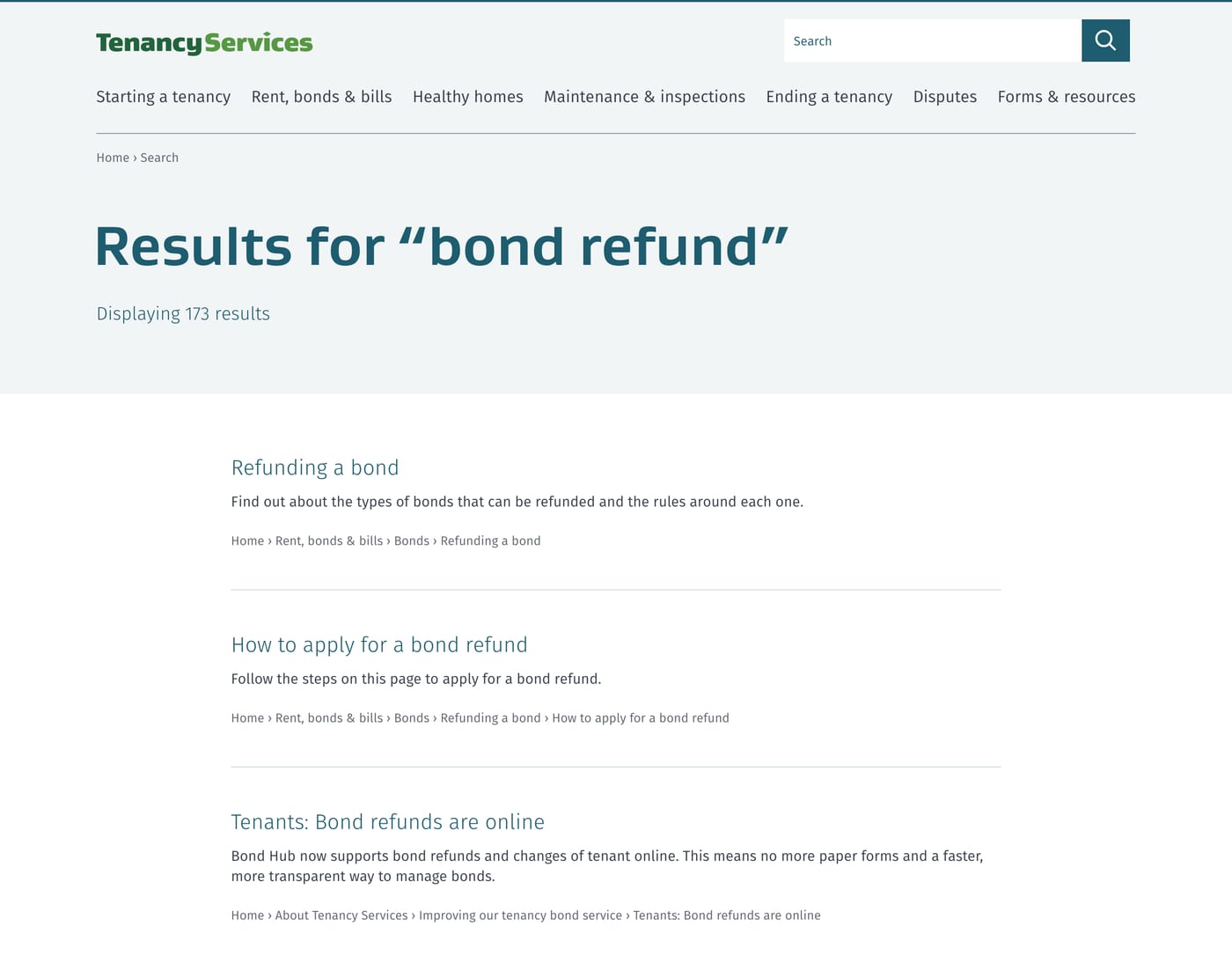
Keyword search works when someone knows the right term. It struggles with the way people actually ask: a whole question, everyday words, a spelling mistake. AI-assisted search reads the question, finds the passages that answer it in the site's own content, and can summarise them with links back to the source.
That only helps if the answers are right. My check of Google's AI Overviews showed how easily a summary drops the condition that makes a fact true. Accuracy has to be tested on real questions, not assumed.
Learning from the rest of government
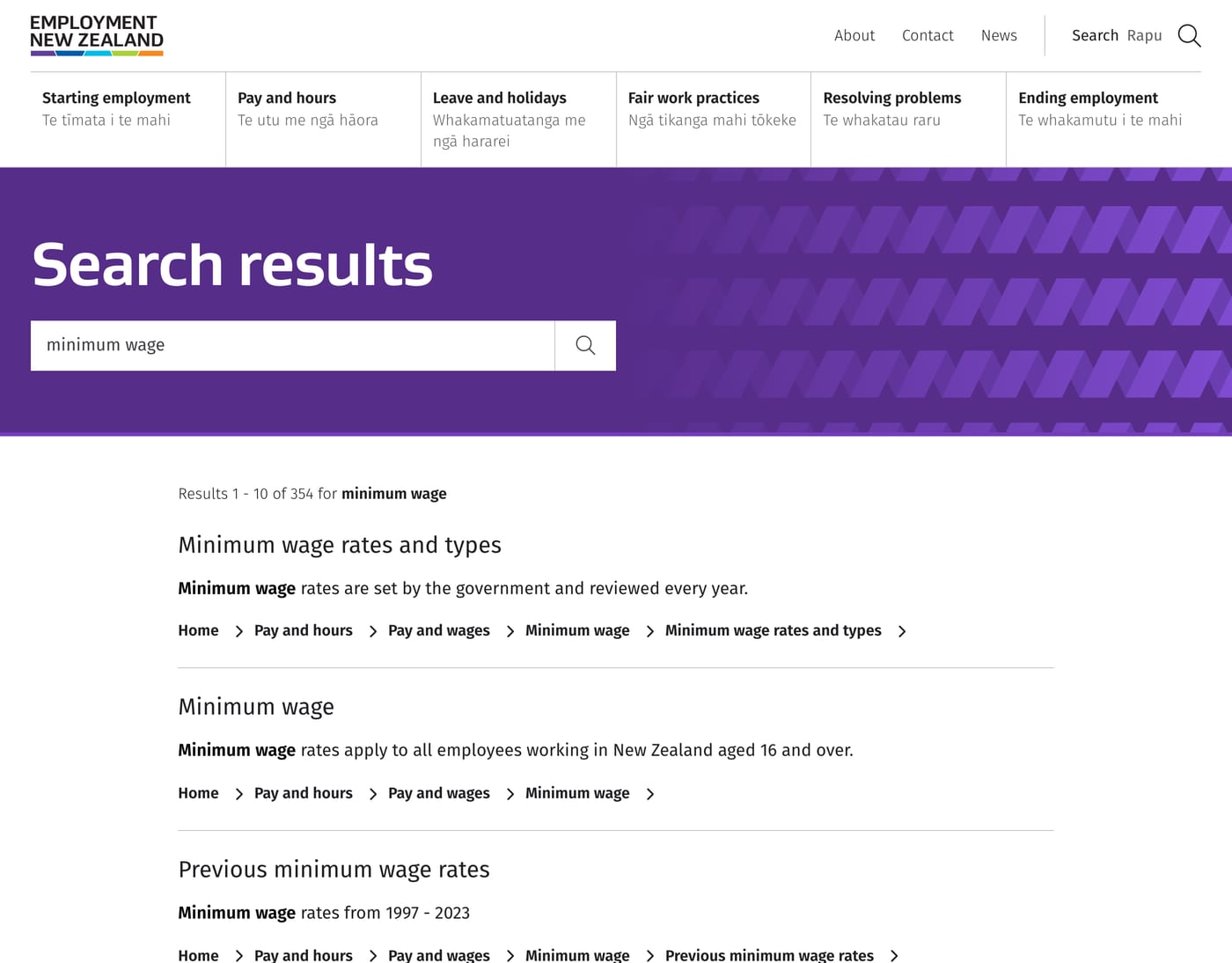
MBIE isn't the only agency working this out. I reviewed how comparable search platforms are used across the Australian and New Zealand public sector, so the options were judged on what other agencies had actually put in place, not on vendor demos.
I also connected a network of search and findability practitioners across New Zealand government, to share what was working and compare approaches, and championed bilingual English and te reo Māori search and accessibility.
Some of this work is internal, so I describe it here in general terms only. It was part of my wider work at MBIE.
- Search
- AI-assisted search
- Options analysis
- Requirements
- Roadmapping
- Workshops